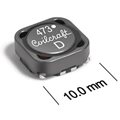
Coupled Power Inductors
for SEPIC – MSD1278 Series
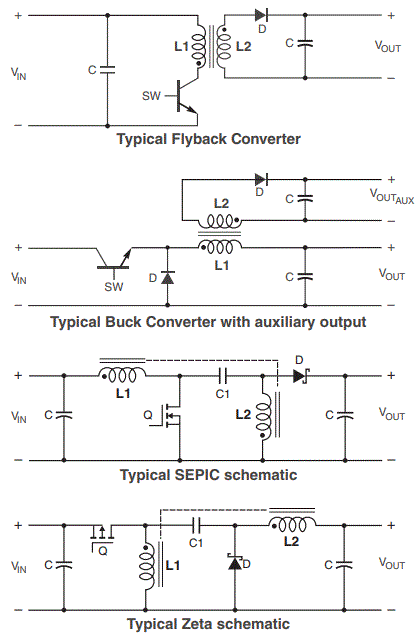
- Ideal for use as coupled inductors in SEPIC
applications
See application note, Doc 639 Selecting Coupled Inductors for SEPIC Applications
- Excellent coupling coefficient: K > 0.94
- Can be used connected in series
or parallel, or as a transformer DETAILS
- Saturation current
rating up to 14.9 Amps! Low DC resistance provides high efficiency
- 500 V isolation, winding-to-winding and winding-to-core
- RoHS-compliant. 260°C compatible. Matte tin over nickel over phos bronze
terminations
- COTS Plus tin-silver-copper and tin-lead terminations available
- Samples of all values are available in
Coilcraft Designer's Kit C400
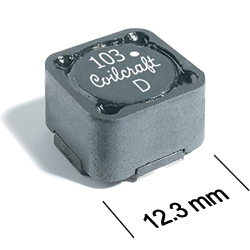
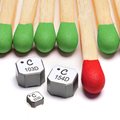
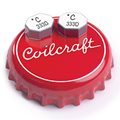
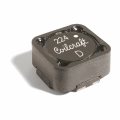
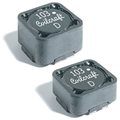
Photo
Pricing
Materials declaration
PDF data sheet
SPECIFICATIONS
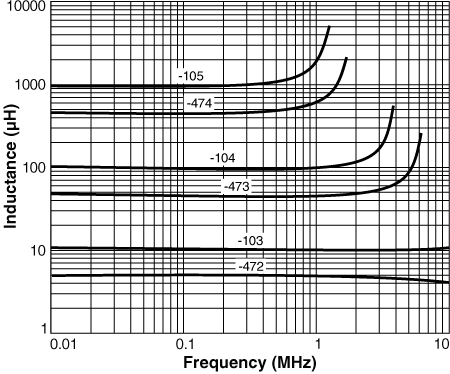
L vs Frequency
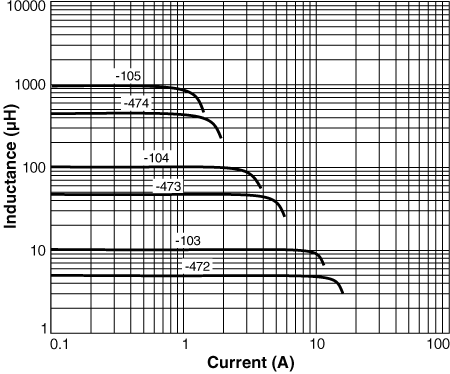
L vs Current Current Derating
Core loss
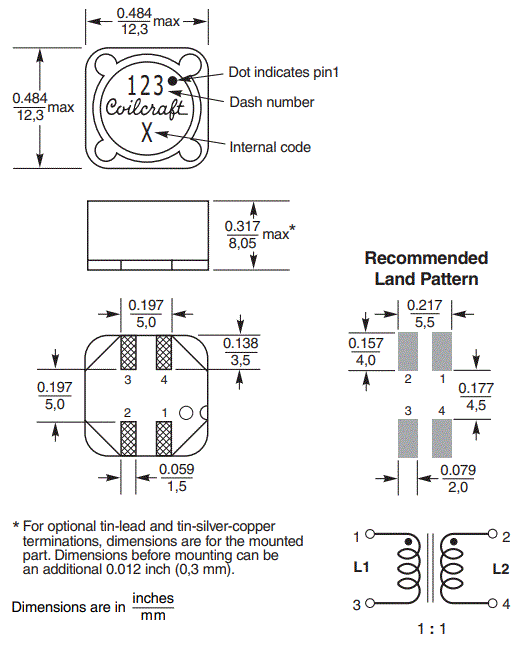
Schematic
Qualification standards
Dimensions
Tape and reel specifications
| 1 |
When ordering, please
specify termination and packaging codes: e.g. MSD1278-105KLD |
|
|
Termination: |
L = RoHS compliant matte tin over nickel over phos bronze
Special order, added cost: T = RoHS tin-silver-copper (95.5/4/0.5) or
S = non-RoHS tin-lead (63/37). |
|
Packaging:
|
D = 13" reel, machine-ready
EIA-481 embossed plastic tape (500 parts per full reel).
B = Less than full reel
In tape, not machine ready. To have a leader and trailer added
($25 charge), use code letter D instead. |
| 2 |
Inductance shown for each winding, measured at 100 kHz, 0.1 Vrms, 0 Adc on an Agilent/HP 4284A LCR meter or equivalent. When leads are connected in parallel, inductance is the
same value. When leads are connected in series, inductance is four times the value. |
| 3 |
DCR is for each winding. When leads are connected in parallel, DCR is half the value. When leads are connected in series, DCR is twice the value. |
| 4 |
SRF measured using an Agilent/HP 4191A or equivalent. When leads are connected in parallel, SRF is the same value. Details |
| 5 |
Isat: DC current, at which the inductance drops 30% (typ) from its value without current. It is the current flowing in one
winding or the sum of the current flowing in both windings. Details |
| 6 |
Irms, both windings: Equal current, when applied to each winding simultaneously, that causes a 40°C temperature rise from 25°C ambient. See
temperature rise calculation. See temperature rise calculation. |
| 7 |
Irms, one winding: Maximum current, when applied to one winding, that causes a 40°C temperature rise from 25°C ambient. See temperature
rise calculation. See temperature rise calculation. |
| 8 |
Ambient temperature range: |
–40°C to +85°C with Irms current.
+85°C to +125°C with derated current Derating curve |
| 9 |
Storage temperature range: |
Component: –40°C to +125°C
Packaging: –55°C to +80°C |
| 10 |
Resistance to soldering heat: Three reflows at >217°C for 90 seconds (+260°C ±5°C for 20 – 40 seconds), allowing parts to cool to room temperature between. |
| 11 |
Electrical specifications at 25°C. |
|
See
Qualification Standards for complete environmental and
test data. |
| Refer to Soldering Coilcraft Components before soldering. |
| |
|
|